Adhesive metal arc welding (SMAW), also known as manual arc welding, is one of the most common and widely used welding methods in the industry. Its simplicity, flexibility, and versatility have attracted the attention of professional and novice welders alike. This article will discuss the principles of SMAW welding, its advantages and disadvantages, its equipment requirements, and its techniques.
Table of Contents
-
Introduction to SMAW Welding
-
History of SMAW
-
SMAW Welding Principle
-
Equipment for SMAW welding process
-
Types of welding electrodes and their applications
-
Advantages and Disadvantages of SMAW Welding
-
Application of Manual Arc Welding
-
Safety Tips When Welding SMAW
-
Manual Electro Welding Technology
-
Common SMAW Welding Disadvantages and Solutions
-
Biography
 1. Introduction to SMAW Welding
SMAW welding is an arc welding process that uses a coated consumable electrode to create a connection between two metal pieces. SMAW welding is widely used in open environments and small workshops due to its ease of use and the need for protective gases (unlike MIG or TIG welding).
2. History of Manual Arc Welding
Manual metal arc welding (SMAW) originated in the late 19th century with the discovery of the electric arc by Sir Humphrey Davy, and developed by Nicolas Bernardis and Stanislav Olgasky . Initially, uncoated electrodes were used, but later painted electrodes were incorporated to improve the quality of the weld.
3. SMAW Welding Principle
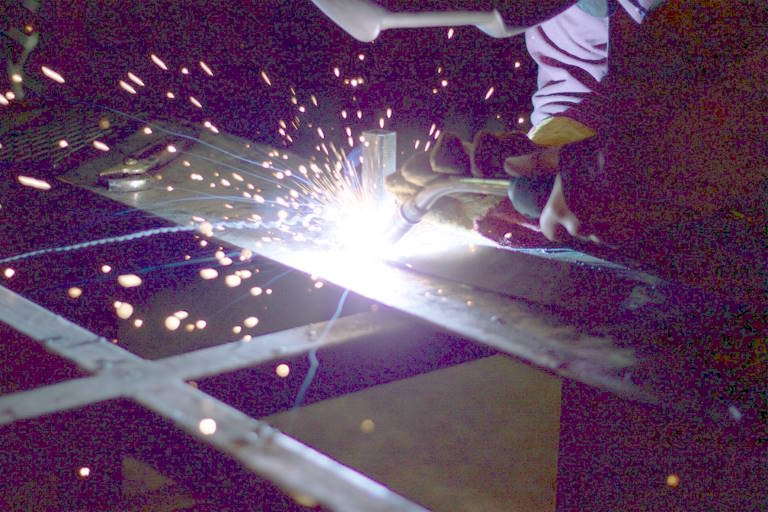
In this method, an electric current (AC or DC) is passed over the welding rod and workpiece using a welding machine. When the welding rod comes into contact with the workpiece, an electric arc is generated, generating the heat needed to melt the base metal and the welding rod. The welding rod coating also decomposes during the welding process, producing a protective gas and slag that protects the welding area from oxidation.
4. Equipment for SMAW welding process
-
Welding Machine (Transformer, Rectifier or Inverter)
-
Coated electrodes
-
Plug Cables & Pliers
-
Welding masks and protective clothing
-
Wire Brush and Soldering Hammer
5. Types of welding electrodes and their applications.
SMAW electrodes are classified according to core material, coating type and application:
-
Mouse tail swivel (E6013): Suitable for welding thin sheets in general
-
Core welding rod (E7018) : is used in welding carbon steel and high-pressure steel.
-
Cellulose welding rod (E6010) : for deep welding of pipes and joints
6. Advantages and Disadvantages of SMAW Welding
Feature:
-
It can be used outdoors and in windy conditions.
-
Low equipment cost
-
Suitable for various electrodes of different metals.
What a shame:
-
Slower than other methods
-
electrodes need to be replaced
-
Scum that needs to be cleaned
7. Application of manual arc welding
-
Steel Frame Building
-
Industrial Machinery Maintenance
-
Oil & Gas Pipeline Welding
-
Shipbuilding and Bridge Building Industry
8. Safety Tips for Manual Metal Arc Welding (SMAW)
-
Use a welding helmet with a UV/IR filter
-
Wear gloves and spark-resistant clothing.
-
Provide adequate ventilation to prevent inhalation of welding fumes.
-
Avoid welding in a humid environment.
9. Electroplated welding technique
-
The correct pole angle (usually between 15 and 20 degrees)
-
Sufficient movement speed
-
Adjust the current according to the thickness of the metal and the type of electrode.
10. Common SMAW Welding Disadvantages and Solutions
-
Porosity : They occur due to surface contamination or moisture on the electrode.
-
Cracks in welding : due to thermal stress or improper composition of welding metal
-
Incomplete penetration: Incorrect adjustment of current or electrode angle
11. Summary and Conclusion
Manufactured Metal Arc Welding (SMAW) is a versatile and economical welding method, ideal for a variety of projects. By choosing the right electrode and following the appropriate safety techniques and principles, strong, high-quality welds can be obtained.
If you want to learn how to solder, SMAW is a great place to start!