introduce
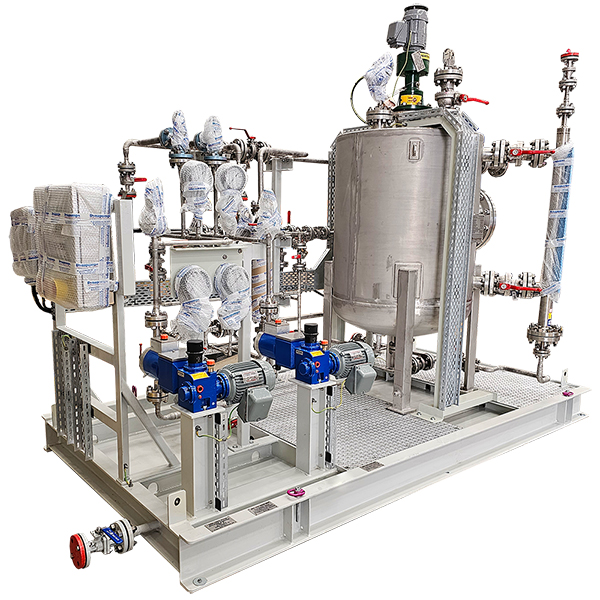
In the industrial processes of oil, gas, petrochemicals, and others, chemical injection pumps play a vital role in the precise and controlled introduction of chemicals into pipes, tanks, and process systems. To ensure the safe and reliable operation of these pumps, several international standards have been developed, one of the most important of which is API 675 .
This article provides a thorough review of API 675 , its technical requirements, how it differs from other standards, and the importance of adhering to this standard in the selection and design of chemical injection pumps.
1. Introduction to API 675
API 675 (American Petroleum Institute ) is one of the most authoritative global standards covering positive displacement pumps: controlled capacity. This standard applies specifically to chemical injection pumps and ensures the high quality, safety and reliability of these pumps.
1.1. Purpose of API 675
-
Identify requirements for the design, manufacture, testing, and installation of high-precision positive displacement pumps.
-
Ensure the pump operates stably under harsh industrial conditions (high pressure, changing temperature , corrosive environment).
-
Reduce the risk of failures and increase the lifespan of your equipment.
-
Integrate the design and manufacture of pumps for the oil, gas and petrochemical industry.
1.2. Differences between API 675 and other pumping standards
-
API 674 and API 675 :
-
API 674 is used for constant speed positive displacement pumps ( such as piston pumps and plunger pumps).
-
API 675 applies to precisely controlled and variable flow pumps (such as diaphragm pumps and peristaltic pumps).
-
-
API 675 and ISO 5199 :
-
ISO 5199 is a general standard for centrifugal pumps, while API 675 is a standard for high-precision metering pumps.
-

2. API 675 Key Requirements
To comply with this standard, chemical injection pumps must have the following characteristics:
2.1. Design and construction
-
The material of construction (stainless steel, nickel alloy, corrosion-resistant coating) should be selected based on the type of fluid (corrosive, toxic, flammable).
-
The sealing system must be suitable for the operating conditions (mechanical seal, packing or double diaphragm).
-
Capable of controlling current within the range of 10% to 100% of rated capacity with an accuracy of ±1%.
2.2. Performance and quality testing
-
Hydrostatic Test: Checks the pump’s resistance to high pressure.
-
Performance Test – Evaluates pump flow, pressure, and efficiency under real-world conditions.
-
Vibration and Noise Test: Ensure that there is no vibration or excessive noise during operation.
2.3. Security requirements
-
Overpressure protection (pressure relief valve) prevents pipes and pumps from bursting.
-
Leak warning system, diaphragm failure or temperature rise.
-
Complies with ATEX standards for use in explosive atmospheres.
3. Importance of API 675 compliance in the oil and gas industry
Compliance with this standard is critical for the process industry for the following reasons:
3.1. Improve reliability
-
Pumps built to API 675 provide longer life and fewer failures .
-
Reduce unnecessary downtime in industrial processes.
3.2. High security
-
Prevent hazardous chemicals from seeping into the workplace.
-
Reduce the risk of fire and explosion in sensitive .environments
3.3. Profitability
-
Reduce maintenance costs.
-
Prevent losses caused by production stoppages.
4. Comparison between API 675 pumps and non-standard pumps
| feature | Pumps that comply with API 675 standards | Non-standard pumps |
|---|---|---|
| Injection Accuracy | ±1% error | ±5% or more |
| Corrosion resistance | Premium materials | Potential for rapid corrosion |
| Warranty and Support | Quality guaranteed by a reputable manufacturer. | Lack of technical support |
| Comply with international law | Getting approval from oil companies | Risk of bid rejection |
5. Conclusion
The API 675 standard serves as a global reference, guaranteeing the quality and safety of chemical injection pumps. The use of pumps manufactured according to this standard will not only improve the performance of the system, but will also prevent industrial accidents and additional costs.
For the oil, gas, and petrochemical industries, selecting pumps that meet API 675 standards is a long-term investment that improves process efficiency and safety.
Keywords: API 675 standard, chemical injection pump, positive displacement pump, API 674 and API 675, chemical injection precision, diaphragm pump.
This article aims to raise awareness of the importance of API 675 in the process industry. To select a suitable pump, it is recommended to consult a professional engineer.