Intergranular corrosion is one of the most serious forms of localized corrosion at the grain boundaries of metals . This seemingly imperceptible phenomenon can significantly reduce the mechanical strength of a material without damaging the metal surface. This article describes the mechanisms, causes, and methods for preventing this type of corrosion.
1. Understanding intergranular corrosion
1.1 Scientific definition
Intergranular corrosion is a local damage characterized by:
-
Occurs at the boundaries of mineral grains.
-
The grain structure remains intact, but the bonds between the grains are destroyed.
-
This can lead to sudden failure of parts without any noticeable change in appearance.
-
It is found mainly in stainless steel, aluminum alloys and nickel alloys.
1.2 Learning mechanism
-
Chromium deficiency zones form at the grain boundaries (in stainless steel) .
-
Segregation of carbides at grain boundaries
-
An electrochemical potential difference arises between grains and grain boundaries.
-
Tuberculosis formation and predominant damage to active zones
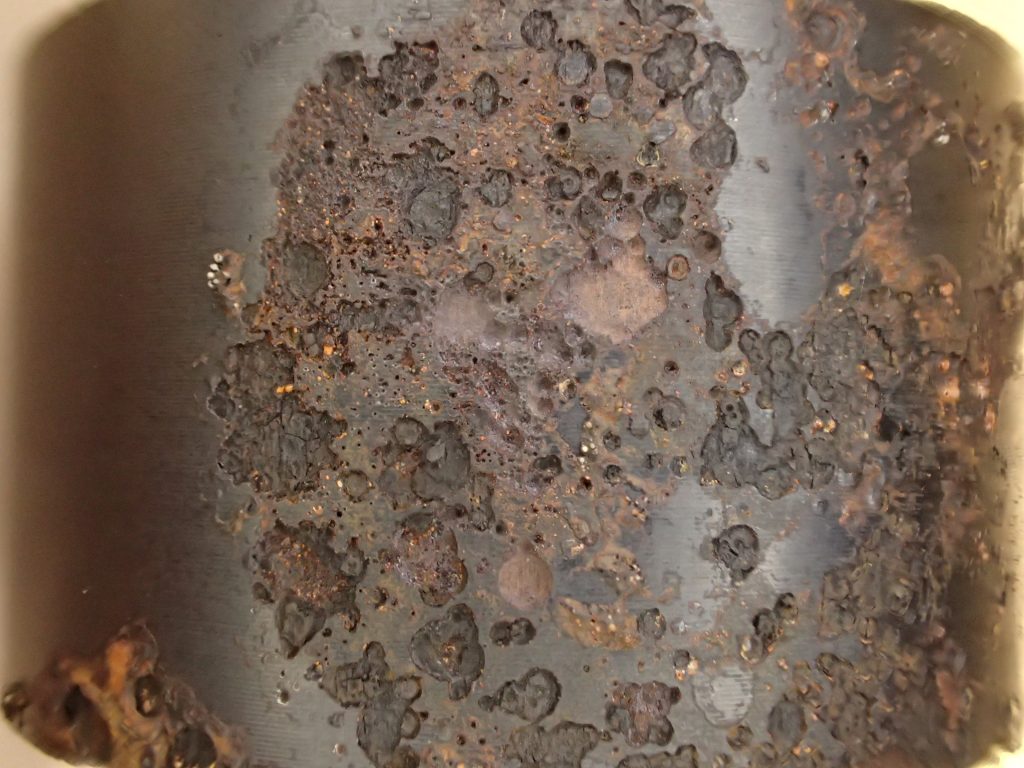 2. Factors influencing the development of intergranular corrosion
2.1 Mineral factors
-
Heat sensitivity : Stainless steel is susceptible to temperatures in the range of 425 °C to 815 °C.
-
Chemical composition of alloys : content of carbon and stable elements.
-
Crystal structure : grain size and crystal orientation.
-
Rapid cooling : prevents the formation of carbides.
2.2 Environmental factors
-
Acidic environment : especially if it contains chloride ions.
-
High temperature : increases the corrosion rate.
-
Mechanical action : accelerates the decomposition process.
-
Presence of oxidizing agents : increases the likelihood of corrosion.
3. Vulnerable areas and sectors
3.1 Chemical and petrochemical industry
-
heat exchanger
-
chemical reactor
-
piping system
3.2 Food and pharmaceutical industry
-
storage tanks
-
Sterile system
-
technological equipment
3.3 Energy industry
-
steam generator
-
Turbines
-
Heat exchangers in power plants
4. Diagnostic and testing methods
4.1 Non-destructive methods
-
Ultrasound examination : detection of local thickening
-
Eddy current testing : Detecting structural changes
-
Thermal imaging : Identification of areas with different thermal conductivity
4.2. Destructive methods
-
Strauss Test: ASTM A262 -Standard for Stainless Steel
-
Huey test : for highly oxidizing environments
-
Mineralogy : direct observation of grain boundaries
5. Prevention and control strategies
5.1 Selection of suitable materials
-
Low-carbon stainless steel (304L, 316L)
-
Titanium or niobium stabilized steel (321, 347)
-
Alloys resistant to intergranular corrosion (Hastelloy, Inconel)
5.2 Thermal method
-
Solution annealing : heating to 1050–1100 °C and rapid cooling
-
Thermal stability : suitable for stable Ti or Nb alloys.
-
Decompression : Reduction of residual stress
5.3 Protection methods
-
Protective coating : epoxy resin or rubber coating.
-
Cathodic protection : suitable for large devices.
-
Environmental control : pH adjustment and oxidation reduction
6. Relevant regulations
6.1 Test criteria
-
ASTM A262 : Standard Test Method for Susceptibility to Intergranular Corrosion
-
ASTM G28 : Test method for intergranular corrosion resistance of nickel alloys
-
ISO 3651 : Determination of intergranular corrosion resistance of stainless steels
Design standards
-
ASME BPVC : Material requirements for the prevention of intergranular corrosion
-
NACE MR0175 : Standard for materials for environments containing H₂S
-
API 571 : Guide to Corrosion Diseases in the Petroleum and Natural Gas Industry
7. Practical examples
7.1 Oil and gas industry
-
Problem : Intergranular corrosion in stainless steel 304 pipes.
-
Solution : Replace it with 316L steel and heat treat it accordingly.
-
Result : The service life of the devices was increased from 2 to 15 years.
7.2 Energy industry
-
Problem : Intergranular stress corrosion cracking in steam turbines.
-
Solution : Use Inconel alloy and carefully control the heat treatment.
-
Result : 80% reduction in the number of unexpected outages.
7.3 Chemical Industry
-
Problem : Destruction of stainless steel reactors in acidic environments.
-
Solution : 321 steel, stabilized with titanium
-
Result : 10 years of continuous operation without problems.
8. New methods of adaptation
8.1 New materials
-
Duplex steel : has a high resistance to intergranular corrosion.
-
Nanomalts : Reduction of grain boundaries and increase of strength
-
Intelligent coatings : self-diagnostic and self-healing capabilities
8.2 Advanced Methods
-
Computer modeling : prediction of risk zones
-
Online monitoring : continuous measurement of corrosion parameters
-
Advanced heat treatment methods : Precise control of heat treatment parameters
Finally
Intergranular corrosion is a hidden danger that can lead to catastrophic failures of industrial plants. To effectively control this phenomenon, the following measures are required:
-
The understanding of the development mechanisms and influencing factors should be deepened.
-
Intelligent material selection to adapt to working conditions
-
To reduce sensitivity, use appropriate heat treatment.
-
Implement regular monitoring and inspection programs
-
Use new technologies for early detection
By implementing these strategies, the risks of this type of corrosion can be avoided and the safety and reliability of industrial facilities can be significantly improved. Recent advances in materials science and monitoring techniques offer great hope for controlling this destructive phenomenon.