Steel is one of the world’s most important industrial alloys. Depending on its chemical composition and microstructure, it can be divided into different types. Each type has its own properties, advantages, and applications. Ferritic steel , the most important type of stainless steel and structural steel, is used in various industries due to its unique properties.
In this article, we will look in detail at what ferritic steel is, its structure, its physical and mechanical properties, and the industries in which it is used.
What is ferritic steel?
Ferritic steel is a type of stainless steel whose basic crystal structure is ferrite . Ferrite is a solid with a body-centered cubic (BCC) lattice, stable in iron at low temperatures.
In fact, ferrite is one of the main phases in the iron-carbon phase diagram, and its presence in the microstructure of steel is responsible for its unique properties. Ferritic steel typically contains 10.5% to 30% chromium (Cr) and a very low carbon content (less than 0.1%). This combination gives it excellent corrosion resistance.
Structure of ferritic steel
The main properties of the ferrite structure are:
-
BCC Red: This type of structure makes ferritic steel magnetic .
-
Low carbon content : Due to its lower carbon content, ferritic steel has lower hardness and tensile strength than martensitic steel, but has higher ductility and corrosion resistance.
-
High chromium content : the main factor for the corrosion resistance and thermal stability of ferritic steel.
Properties of ferritic steel
1. Mechanical properties
-
Medium strength (lower than austenitic and martensitic steels).
-
Plasticity and toughness are lower than in austenitic steels.
-
Low corrosion and impact resistance.
2. Physical properties
-
Magnetism : Unlike austenitic steel, which is not magnetic, ferritic steel is magnetic.
-
Low coefficient of thermal expansion : offers better resistance to thermal shocks.
-
Has a higher thermal conductivity than austenitic steel.
3. Corrosion resistance
-
It has good resistance to aggressive environments, especially chlorides.
-
Has better resistance to stress corrosion cracking than austenitic steel.
4. Welding and processing options
-
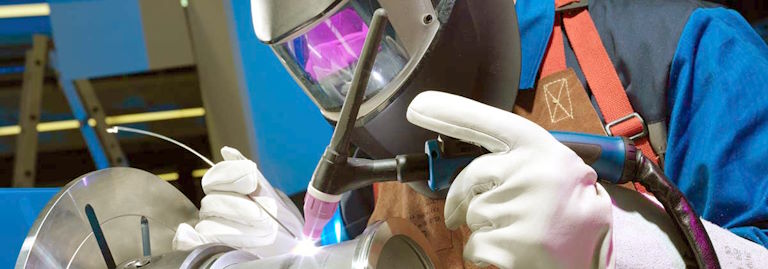
Ferritic steels are more difficult to weld than austenitic steels because they tend to form brittle phases in the weld zone.
-
The processing is relatively simple.
Classification of ferritic steel
Ferritic steels can be divided into different classes depending on their chromium content and properties :
-
Low-alloy ferritic steel (10.5–18% chromium) : has moderate corrosion resistance and is used in household appliances and construction.
-
High-alloy ferritic steel (18% to 30% chromium) : has increased corrosion and oxidation resistance and is used in the chemical industry and power plants.
-
Stabilized ferritic steels : The addition of elements such as titanium (Ti) or niobium (Nb) improves structural stability and reduces susceptibility to intergranular corrosion.
Advantages of ferritic steel
-
It has high resistance to cracking and stress corrosion.
-
It has good antioxidant properties at high temperatures.
-
Lower cost than austenitic steel (since high nickel content is not required).
-
Magnetism is advantageous in some applications.
Disadvantages of ferritic steel
-
At sub-zero temperatures the hardness decreases.
-
Welding is made more difficult by the formation of brittle phases.
-
The tensile strength is lower than that of other types of steel, such as martensitic steel.
Applications of ferritic steel
Ferritic steel is used in many industries due to its unique combination of properties, including:
-
automotive industry
-
Due to its high heat and corrosion resistance, it is used in the manufacture of exhaust systems.
-
Trim parts are used in automobiles because of their shiny appearance and durability.
-
-
household appliances
-
Washing machines, refrigerators and stoves.
-
Kitchen utensils and washing tools.
-
-
construction industry
-
Decorative facades and building facades.
-
Doors and windows are corrosion-resistant.
-
-
Energy industry and power plants
-
Heat exchanger.
-
Gas and steam supply systems.
-
-
Chemical and petrochemical industry
-
Devices that come into contact with weak acids and alkalis.
-
Difference between ferritic, austenitic and martensitic steel
| Special feature | ferritic steel | austenitic steel | Martensitic steel |
|---|---|---|---|
| Crystal structure | BCC (ferrite) | FCC (austenitic) | BCT (martensite) |
| Magnetic | Magnetic | non-magnetic | Magnetic |
| Performance | half | higher | very large |
| plastic | half | Great | fewer |
| Corrosion resistance | Yes | Great | weaker |
| Welding skills | limited | Great | difficult |
Ferritic steel and the environment
The advantage of ferritic steel lies in its low production costs and its environmental friendliness due to its low nickel content. Furthermore, it is easily recycled, making it an environmentally friendly steel.
The future of ferritic steel
Given the increasing industrial demand for corrosion-resistant and cost-effective materials, ferritic steels will play an increasingly important role in the future. The use of modern welding techniques and improvements in the microstructure of these steels can help reduce their limitations and expand their range of applications.
Finally
Ferritic steel is one of the most important stainless steel grades and is characterized by a body-centered cubic (BCC) ferritic structure. Thanks to its high chromium and low carbon content, this steel exhibits excellent corrosion and oxidation resistance, although its strength and toughness are lower than those of other steels. Due to its magnetic properties, low cost, and good resistance to stress corrosion cracking, ferritic steel is widely used in the automotive, construction, power generation, and household appliance industries.
Due to technological advances and improvements in manufacturing and welding processes, ferritic steel is expected to occupy a larger share of the stainless steel market in the future.