Spills are a serious problem in many industries that involve chemicals, fuels, oils, and even common liquids. Even small, persistent drops can cause serious damage to equipment or pose long-term safety and environmental risks. One of the simplest and most effective solutions to this problem is the use of a spill containment system . These are trays or containers that prevent liquids from escaping into the environment, allowing for their safe collection and disposal.
What is a drip tray system?
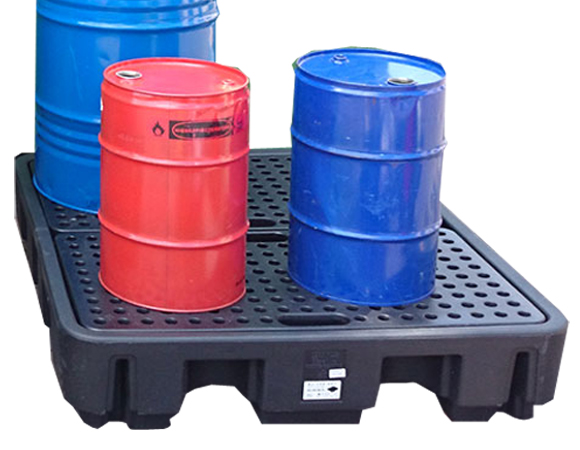
A sump is a tray or storage container placed beneath equipment, tanks, valves, or conveying lines. Its main functions are:
-
Catch any dripping or leaking liquids.
-
Make sure that no hazardous substances get onto the floor or work surface.
-
Reduce the risk of slips and falls for employees.
-
Protecting the environment from pollution.
These systems are available in different sizes and shapes and can be simple (fixed trays) or advanced (with automatic drainage systems or level sensors).
The importance of using drip trays in industry
1. Employee safety:
Spilled oil or acidic liquids on the floor can cause slipping and burns. Using a drip tray reduces the risk of such accidents.
2. Corrosive fluids leaking from protective equipment
may cause corrosion, rust, or damage to the workshop and surrounding equipment.
3. Compliance with legal and environmental requirements.
Many international standards, including those of the U.S. Occupational Safety and Health Administration (OSHA) and the U.S. Environmental Protection Agency (EPA), emphasize the need to prevent hazardous substance emissions in the industrial sector. Condensate collection trays are a simple way to meet these requirements.
4. Cost reduction
: Avoiding the generation of chemical waste and reducing the costs of environmental remediation lead to significant savings in the long term.
Types of Chinese drip systems
1. Fixed drip tray
-
The simplest type of drip tray.
-
They are usually made of durable metal or synthetic plastic.
-
They are installed under stationary devices or valves.
2. Portable drip tray
-
They are light and easy to transport.
-
Suitable for regular or scheduled maintenance.
3. Mesh drip tray
-
They have a walkable mesh surface for employees.
-
The liquid is collected in the lower tank using a sieve.
4. Self-draining drip tray
-
Equipped with a drain hole or drain pipe.
-
The collected liquid can be directed to a storage tank or a recovery system.
5. Intelligent drip tray
-
Equipped with level sensors .
-
In case of filling, an alarm or an automatic pumping system is triggered.
Pallet materials from China
-
Stainless steel: Corrosion-resistant and suitable for harsh industrial conditions.
-
Carbon steel with stainless steel coating: more economical , but requires more careful maintenance.
-
Polyethylene (PE) or polypropylene (PP): resistant to many acids and alkalis.
-
Fiberglass (FRP): lightweight and resistant to some corrosive materials.
The choice of tray material depends on the type of liquid, temperature, environmental conditions and budget.
Use of drip trays in various industries.
-
Oil and gas industry
-
Avoiding hydrocarbon emissions during loading and unloading .
-
Collect water dripping from valves and edges.
-
-
petrochemical and chemical industry
-
Safety during the transport of soda and acids.
-
Protecting production floors from corrosive materials.
-
-
power plant
-
Used under fuel and oil tanks in turbines.
-
Collecting oil droplets from pumps and rotating equipment.
-
-
Automotive repair and maintenance workshops
-
Do not spill engine oil or coolant on the ground.
-
-
Warehouses and storage areas for chemical products
-
They are installed under barrels and containers to prevent the spread of materials in the event of a leak.
-
Design and installation of drip protection systems
When designing and selecting a drip tray, the following factors should be considered:
-
Size and capacity: The platform must be designed to accommodate potential spills. Generally, the platform’s capacity should be at least 110% of the capacity of the largest available container or drum.
-
Chemical resistance: The platform material must be resistant to the materials it supports.
-
Mechanical strength: The platform must be able to withstand the weight of equipment or the movement of people.
-
Drainage system: For larger platforms, a drainage or pumping system is required.
-
Fire protection: In the oil and gas industry, projects must comply with fire safety regulations.
Standards and requirements for drip trays
The use of drip trays is not just an option in many industries , but is required by law. Relevant standards include:
-
OSHA (USA): Requires the use of equipment to prevent the release of hazardous substances.
-
US Environmental Protection Agency (EPA): Strict requirements to prevent soil and water pollution.
-
NFPA: In fire-hazardous industries, platform structures must comply with fire protection standards.
-
ISO 14001: Environmental Management Systems recommends the use of containment systems as a preventative solution.
Maintenance and inspection of the drip tray
Like any other device, drip trays need to be regularly maintained and checked:
-
Drain the accumulated fluid regularly.
-
Flush and clean it regularly to avoid buildup and blockages.
-
Visually inspect for cracks and wear.
-
Chemical resistance has been confirmed by many years of use in aggressive environments.
Advantages of using a drip tray
-
Reducing safety and health risks.
-
Prevent environmental damage.
-
Extends the life of equipment and floors.
-
Helps comply with legal requirements and standards.
-
Reduced cleaning and maintenance costs.
Finally
Condensate collection systems may seem simple, but they play a crucial role in ensuring occupational safety, protecting the environment, and reducing operating costs. In industries such as oil and gas, petrochemicals, power plants, and even small workshops , their proper use is not only required by law but also a sensible preventative measure.
In a world where safety and environmental sustainability are increasingly important, investing in spill trays and similar systems is a crucial step for any industrial company.