Introduction: Challenges and innovative solutions in offshore oil fields
The oil and gas industry continues to face numerous challenges. The most significant challenge is the safe and economical extraction of oil and gas from offshore fields, especially in extremely deep waters. The construction of fixed platforms and the laying of long pipelines to transport crude oil to land are often costly and time-consuming, and in some cases, completely impossible for technical or economic reasons.
This is where mobile oil treatment technology (MOT) comes to the rescue.
This solution revolutionized the industry and provided a flexible and cost-effective solution. These plants are essentially small floating refineries that can be deployed directly offshore to process produced crude oil on site and prepare it for transportation.
This study provides a comprehensive analysis of the concepts, components, benefits, challenges, and applications of TO units in the global oil and gas industry.
What is a mobile oil treatment unit (MOTU)?
A mobile oil processing unit (MOPU) is typically a floating or semi-floating structure capable of processing crude oil at sea. This term is often used synonymously with a floating production, storage, and offloading unit (FPU), although an FPU is a more advanced and complex version of a mobile oil processing unit (MOPU).
Simple definition: A large vessel not used to carry passengers or cargo, but with facilities for receiving crude oil from underwater sources, separating major impurities (such as water, salts, gases, and solids), producing a homogeneous, marketable crude oil , and storing it in tanks for transport to land by oil tankers.
The main objective is to refine crude oil into stable crude oil that meets market standards.
Main components of the maintenance device
The technical test block usually consists of the following main parts:
1. Technological block:
is the core of the MOT block and includes equipment and devices that carry out the separation process:
-
Separators: These devices use density differences to separate a mixture of oil, gas, and water into multiple phases (usually a three-phase separator: oil, gas, and water).
-
Desiccants/Deionizers: These desiccators use freshwater flushing and electric fields to remove dissolved salt residues and small water particles from the oil. This step is essential to prevent equipment corrosion and improve oil quality.
-
Gas purification plant: The separated gas can be burned in a combustion chamber (flaring), which is undesirable today, or cleaned in more modern plants and used for reinjection into a storage tank, for use as plant fuel (fuel gas) or even for liquefaction (GL).
-
Outlet oil cooler: The processed oil must be cooled before it is fed into the storage tank.
2. Strapping and unloading system:
-
Mooring system: The MOT must be installed in a permanent or semi-permanent position to withstand the effects of waves, wind, and currents. This requires the use of complex systems, such as single-point or extended mooring systems.
-
Oil drain system: After the oil has entered the tank, a shuttle tanker is connected to the MOT unit and the oil is pumped into the unit through a charging sleeve or a special container.
3. Storage tank:
The FPSO structure is a huge oil tank that can store tens of thousands to millions of barrels of oil.
4. Accommodation and additional costs:
-
Accommodation: These troops will be at sea for several weeks, so they will have access to lounges, kitchens, gyms, and staff facilities.
-
Facilities: These include power generation systems (generators), fresh water production, compressed air systems, and fire alarm and suppression systems.
Advantages of using a mobile on-board processor (MOP)
The use of these devices offers significant advantages over conventional methods:
1. Significant cost savings (profitability):
-
No more expensive pipelines: Transporting crude oil from reservoirs to shore via underwater pipelines is one of the most expensive steps in developing offshore fields. The MOT system eliminates this effort .
-
Reduced field development time: The construction and installation of an MOT unit takes less time than the construction of a fixed platform and pipeline, resulting in faster oil production and a faster return on investment.
-
Lower decommissioning costs: At the end of a field’s life, a periodic inspection unit can be removed from the site and transported to another field, while the disposal of a fixed platform is expensive.
2. Flexibility and mobility:
This is one of the most important advantages of regular inspection. After a field is exhausted, the equipment can be dismantled, comprehensively serviced , and then transported to a new field. This advantage makes the initial investment extremely cost-effective.
3. Development of marginal oil fields:
Many oil and gas fields are small or located in remote areas, making their economic development difficult using conventional methods. However, the use of MOT technologies makes the development of such fields economically viable.
4. Reduced exploration risks:
In areas with incomplete reservoir information, the use of MOT units as a temporary solution enables increased production and reservoir exploration without the need for significant investments in permanent infrastructure.
5. Safety and environmental protection:
Modern offshore oil refineries are equipped with state-of-the-art safety, control, and monitoring systems. Offshore refining and oil transport by tanker reduce the risk of oil spills in long pipelines. Furthermore, these facilities implement new strategies to reduce natural gas flaring (reducing associated flaring).
Main problems and considerations
Despite the many advantages, the use of MOT devices also brings with it some challenges:
-
High initial investment costs: The construction or conversion of a vessel into a test bed for technical testing requires a very high initial investment.
-
Technical and operational complexity: Managing and operating a floating chemical plant in the middle of the ocean under changing weather conditions requires highly skilled workers and modern control systems.
-
Environmental concerns: Despite eliminating pipeline hazards, oil spills can still occur during tanker loading or during severe storms. Disposing of contaminated production water also presents a major challenge.
-
Dependence on weather conditions: Loading oil onto tankers during storms is difficult, sometimes even impossible, and can lead to temporary production disruptions.
-
Logistics and supply issues: Transporting personnel, spare parts, and consumables to forces in remote waters is inherently complex and costly.
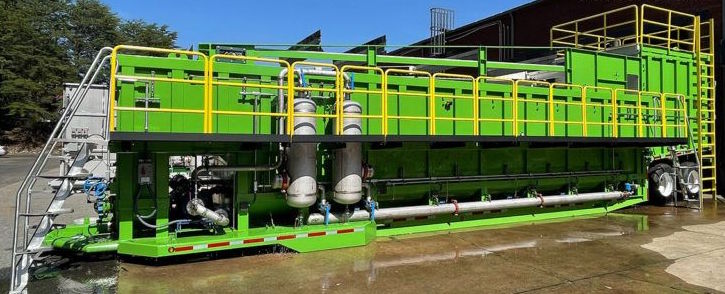
MOT and FPSO: What is the difference?
Although these two terms are often used synonymously, there is a subtle difference between them:
-
Mobile Offshore Processing Units (MOPUs): These units are primarily designed for oil refining . They can be small and simple, installed on semi-submersible platforms or small vessels, and do not necessarily require large oil storage tanks or can be loaded directly onto oil tankers. These units allow the transfer of processed oil to other storage facilities or platforms.
-
FPSO (Floating Production, Storage and Offloading Unit) is an integrated concept that combines the three functions of production (processing), storage and offloading in a single container (usually a ship).
Thus, it can be said that every FPSO is a modern and complete inspection unit, but not every inspection unit is necessarily an FPSO.
Application of a periodic monitoring device in the Iranian oil industry
Iran has huge oil and gas reserves in the Persian Gulf and has great potential to use this technology:
-
Joint development of oil fields: By utilizing oil resource management, the development and exploitation of joint oil fields can be accelerated and the waste of national resources can be avoided.
-
Development of small offshore fields: For small offshore fields where the construction of a pipeline is uneconomical, onshore or nearshore MOT installations can be an ideal solution.
-
Flow testing and evaluation of new oil fields: Before making large investments in the development of new oil fields, MOT tools can be used to evaluate reservoir performance and oil quality .
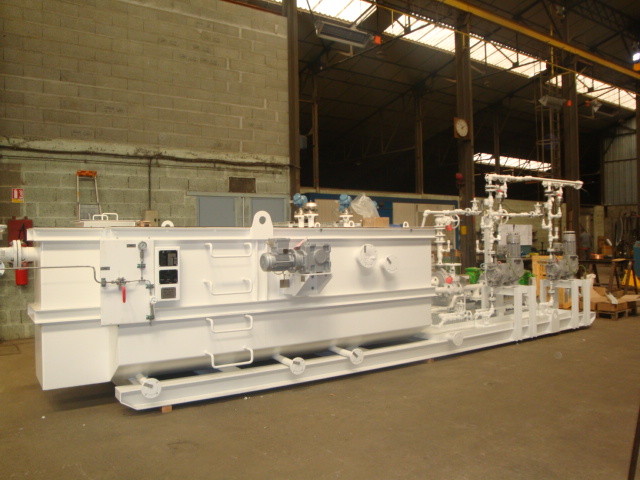
Conclusion: The future belongs to mobile and flexible technologies.
Mobile oil refineries (MOFs) and their more advanced variants, floating production, storage and offloading systems (FPSOs), are no longer considered alternative technologies, but rather a standard and essential solution for offshore oil and gas production, especially in deep waters and remote areas.
Thanks to technological advances, decreasing storage capacities , and the increasing importance of cost efficiency, these vessels will play an increasingly important role in the oil and gas industry of the future. Modular design, standardization, increased automation, and reduced environmental impact will be key factors in the development of the next generation of giant floating vessels in the oil industry.
This technology is not only a remarkable technical achievement, but also a symbol of the resilience and innovative capacity of the oil industry to meet the challenges of the 21st century.