Chlorine is one of the most important and widely used disinfectants in various industries, particularly in water treatment. It is employed as an indispensable and effective disinfectant in many sectors, including swimming pools, wastewater treatment plants, factories, agriculture, and even hospitals. However, precise control of the chlorine supply is crucial, and liquid chlorination systems play a key role in this.
A liquid chlorinator is a mechatronic device for the precise dosing and dispensing of liquid chlorine (sodium hypochlorite or industrial bleach) into drinking water or wastewater. It serves to maintain water quality, prevent microbial growth, control contaminants, and increase safety. The higher the water quality requirements or the stricter the process specifications, the more important the use of a specialized liquid chlorinator becomes.
This article provides a detailed overview of liquid chlorinators, including their operation, types, construction, applications, advantages, installation principles, maintenance methods, and cost factors. It is particularly useful for facility managers, water treatment specialists, environmental science students, and anyone working with chlorination systems.
What is a liquid chlorine device?
A liquid chlorinator is a device that uses a syringe pump or vacuum system to inject a specific amount of liquid chlorine or sodium hypochlorite (NaOCl) into a stream of water. The injection can be continuous, intermittent, or dependent on the residual chlorine level.
The most important applications of chlorine:
-
Prevention of microbial contamination
-
Eliminates unpleasant odors from the water.
-
Control of algae and fungal growth
-
Creating safe conditions for the provision of drinking water or sanitary facilities
Industrially, liquid chlorine is typically produced at a concentration of 10–15% and is safer than gaseous chlorine. Therefore, many plants today prefer the use of liquid chlorine generators instead of gaseous chlorine.
The main components of a liquid chlorine generator
A standard liquid chlorine sterilizer typically consists of the following components:
1. Chlorine storage tank
The container is usually made of robust polyethylene or acid-resistant steel and is used to store sodium hypochlorite.
2. Injection pump (fuel pump)
The most important component of a chlorine disinfection device is a corrosion-resistant pump that can inject a specific amount of chlorine under a specific pressure.
Features of high-quality dosing pumps:
-
Flow control performance
-
High resistance to chemicals
-
Continuous operation
-
Digital or manual control possible.
3. Valves and fittings
They serve to prevent backflow and leakage and to regulate pressure.
4. Chemical-resistant pipes
They are usually made of polyethylene (PE), polyvinyl chloride (PVC) or polytetrafluoroethylene (Teflon).
5. Management and Control System
The following are among the advanced models:
-
Digital controller
-
Residual chlorine sensor
-
early warning system
-
Remote control function
Ferretto Booklet – Pocket Edition
What is the operating principle of a liquid chlorination device?
The operating principle of a liquid chlorine generator can be described in the following steps:
-
Liquid chlorine is stored in a storage tank.
-
The dosing pump must be adjusted according to the water flow rate and chlorination requirements.
-
The pump injects a specific and controlled amount of chlorine into the water supply.
-
A mixture of chlorine and water can kill bacteria.
-
In automated systems, residual chlorine sensors regulate the injection volume.
This process may seem simple, but it plays a crucial role in the quality and health of the water.
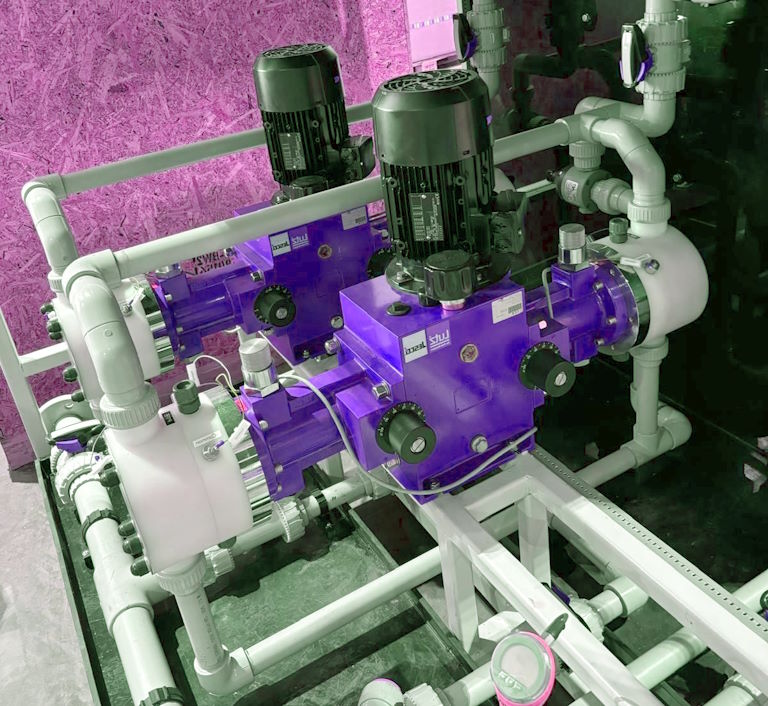
Types of liquid chlorination equipment
Chlorination equipment can be classified into the following categories depending on its operating mode, injection system, and level of automation:
1. Portable liquid chlorination device
This system allows for fully manual control of the chlorine flow. It is suitable for small pools, gardens, and other facilities that do not require high chlorine concentrations.
Advantages:
-
Low price
-
Maintenance-friendly
Shortage:
-
Low accuracy
-
The need for human control
2. Semi-automatic liquid chlorination system
Chlorine injection occurs according to the initial settings, but the system has control and alarm functions.
Inquiry:
-
Building
-
Medium-sized industrial companies
-
large swimming pool
3. Automatic liquid sterilizer (smart sterilizer)
The system uses precise sensors to measure the residual chlorine level in the water and automatically adjusts the flow rate.
Advantages:
-
High precision
-
Reduce chlorine consumption
-
Suitable for drinking water.
4. Vacuum chlorination plant
In this system, chlorine gas is introduced into a vacuum. The system is very safe and poses a low risk of leakage.
Applications of liquid chlorine generators
Liquid chlorination systems are widely used in various industries and sectors. Here are some of their most important applications:
1. Purification of municipal water
It serves to purify drinking water and maintain public health.
2. Wastewater treatment plants
Chlorine is used to disinfect wastewater before it is released into the environment.
3. Swimming pool
It inhibits the growth of algae and fungi and keeps the water clean.
4. Companies in the food industry
It is used for cleaning equipment, production lines and drinking water.
5. Livestock and poultry farming
It is used to disinfect drinking water for farm animals and to prevent the spread of diseases.
6. Greenhouses and Agriculture
Combating the pollution of irrigation water.
7. Oil and petrochemical industry
To prevent the development of corrosive microorganisms on power lines.
Advantages of using liquid chlorination equipment
1. Compared to chlorine,
sodium hypochlorite is considered safer and poses a lower risk of explosion and a lower risk of the formation of toxic gases.
-
Possibility of precise injection control using metering pumps and sensors. -
Environmentally friendly:
Does not pollute the environment when used properly. -
Installation and maintenance are simple,
especially with the standard model. -
It can
be used in spaces of any size, from small swimming pools to urban water supply networks. -
By reducing chlorination costs in automated systems,
chlorine consumption can be reduced by up to 30%.
Comparison of liquid chlorine and gas chlorine generators
| Special feature | Liquid chlorine device | Gas sterilizer |
|---|---|---|
| Protection | higher | Reduced |
| It’s worth it | half | fewer |
| Injection accuracy | very good | Yes |
| Specialist knowledge required | A little | many |
| Inquiry | General and industrial | large industries |
| Save | base | More difficult |
Important points for installing a liquid chlorine generator
To ensure the proper functioning of the devices, the following principles must be observed:
-
Store the devices in a dry, dark place.
Liquid chlorine loses its effectiveness when exposed to light. -
Use chemical-resistant pipes .
-
Leveling and reinforcement of the pump foundation.
-
Install a check valve (shut-off valve)
to prevent backflow of water. -
Adjust the injection dose according to the instructions for use.
-
For safety reasons, connect the device to the grounding system.
Important tips for maintaining liquid chlorination systems
To extend the lifespan of your devices and avoid failures:
-
Check connections and ports regularly.
-
Protect chlorine bottles from high temperatures and radiation.
-
It is recommended to service the water pump every 3 to 6 months .
-
Use fresh liquid chlorine; old chlorine loses its effectiveness.
-
The injection tube should be flushed every few months.
-
Chlorine leaks should be avoided as they can cause corrosion.
What factors influence the price of liquid chlorination systems?
The price of this equipment varies depending on the following factors:
-
For example, there is a big difference in injection capacity (l/h); a pump with a capacity of 5 l/h is very different from a pump with a capacity of 50 l/h. -
Pump type ( electric or electric)
-
The level of automation and the intelligence of the devices
-
Materials and accessories for water tanks
-
European brands are generally significantly more
expensive. -
Accessories include chlorine sensors and digital control units.
-
State of the chemical market
Important tips for choosing the right chlorine device
Please note the following before purchasing:
1. Water flow
For a water flow rate of 20 cubic meters per hour, you will need a pump with a specific flow rate.
2. Concentration of liquid chlorine
The higher the concentration, the more pumping power is required.
3. Purpose of Chlorination
-
drinking water
-
Wastewater
-
pool
-
Each sector of the food industry
has its own specific needs .
4. Control type
-
management
-
Semi-automatic
-
yummy
5. Chemical resistance of the equipment
The connectors must be corrosion-resistant.
In conclusion
Liquid chlorinators are among the most effective and safest methods for chlorinating drinking water and wastewater . The device uses a pump to dose the required amount of chlorine, thus improving water quality, safety, and hygiene. Selecting the right liquid chlorinator, proper installation, and regular maintenance are essential for an effective system.
If you intend to use it in swimming pools, sewage treatment plants, industrial or agricultural applications, a liquid chlorine system may be an ideal and cost-effective option.